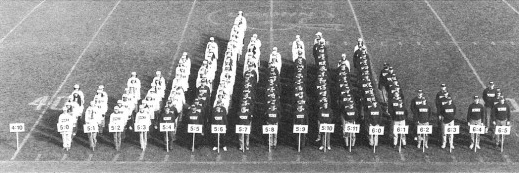
Purpose: This activity will demonstrate how polygenic traits work and why certain traits in a population are graphically represented by a bell curve, or "normal distribution" rather than a few distinct types.
Procedure:
1) In this simulation, we will model that there are 3 genes (6 alleles) involved in the expression of height, and that their effects are cumulative. You will flip 6 coins (3 coming from each "parent"). Each coin flip of heads will give an H1 (the allele for tall) while tails gives an H2 (the allele for short). A person's total height is a result of the cumulative effects of these 6 codominant alleles, as shown below:
|
|
|
|
|
|
|
|
|
|
|
|
|
|
|
|
|
|
|
|
|
|
|
|
|
|
|
|
|
|
|
|
2) Complete Table 1 below by recording the number of heads and tails that resulted from each set of 6 coin flips. Repeat this process 10 times, representing 10 different children. Yes, that's 60 coin flips in total!
Results:
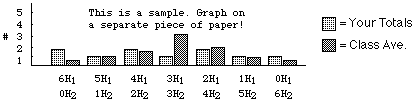
Table 1: Number of heads and tails flipped (out of 6) for each of your ten babies. Make a histogram as shown below of your results and of the class averages (if data is available).
|
|
|
|
|
|
|
|
|
|
|
|
|
|
||||||||||
|
|
Questions:
0) How did your individual results compare to the class average? Why is the class average more like a bell curve than your individual results?
1) Each parent gives what percentage of his/her genetic material to their children? ____
2) If a man is 5 feet 8 inches tall, then he has 4 H1 alleles and 2 H2 alleles. He can only give 3 of his 6 alleles to his child. What are all the possible combinations?
3) If dad is 5 feet 8 inches tall and mom is 5 feet 6 inches tall, is it possible for them to give their child the necessary alleles to be 5 feet 10 inches tall. (Hint: start by filling in the baby's alleles and work backwards.)
4) If both parents are 5 feet 6 inches, it is possible for them to have a child that is 6 feet tall? Show which alleles each parent must give to make this possible:
5) If a man is 5 feet 4 inches tall and a woman is 5 feet 0 inches tall, what is the tallest height that their child could attain?
6) If a man is 5 feet 8 inches tall and a woman is 5 feet 4 inches tall, what is the shortest height their child could attain?
7) If height was controlled by a single gene, then the resulting phenotypes would be discrete (tall, medium and short) and easily distinguished. A polygenic trait is one that is controlled by many genes. As a result, the range of phenotypes is more continuous. Is human skin color polygenic? Based on your observations of human variation, are most traits controlled by single genes or many genes?
8) Would two parents who are 5 feet 10 inches tall tend to produce more tall children or more short children? Why?
9) If the low and high limits of height didn't change, but height was controlled by six genes rather than the three in our model, should the gradations between heights be more smooth or more discrete? Why?
10) Why do you think that the average height in the U.S. today is several inches more than it was about 100 years ago? (Hint: it has nothing to do with genetics!)
Calculating the odds with coins:
Each time you flip a coin, the odds of heads or tails is 1/2, or 50% The odds of getting 3 heads from 3 flipped coins is calculated as (0.5)x(0.5)x(0.5)=0.125 or (1/2)x(1/2)x(1/2)=1/8. Each event is independent but you multiply to determine the odds of all three happening together. Still, even if you rolled 3 heads in a row, the odds of the next coin being heads is 50% because each event is independent. That might not sound intuitive, but think about it this way: the coin has no history and it has to land on one side or the other, so no matter what has happened before, the odds are 50:50 for each flip. Why then, can you sometimes get a run of heads or a run of tails? It's just chance. We expect a 50:50 ratio of heads to tails, and will get very close to that if we flip the coin many times, but flip it only a few times and you might get a run of heads or tails. In the long run though, it will be balanced out by a run in the other direction. In the human population, there are some families that have all boys or all girls, yet in the population as a whole, the sex ratio is very nearly 50:50. The odds of having a boy or a girl are determined by whether the sperm that meets egg is carring an X or a Y chromosome, and that's more or less a 50:50 chance because of meiosis.
Challenge: Calculating the odds with genes:
Let's do a little math to determine the odds in our height simulation above. If a man has the genotype H1H1H1H2H2H2 and will contribute half of those alleles to the baby, the odds of the genotypes are calculated below. Remember however that we are sampling without replacement, and multiplying each probability for the combined result. Why the 3 in the second and third calculations? There are three possible ways to get this genotype.
probability of sampling three H1 (H1H1H1) from H1H1H1H2H2H2: =(3/6)(2/5)(1/4)=6/120=1/20=0.05=5%
probability of two H1 and one H2: H1H1H2 (or H1H2H1 or H2H1H1)=3(3/6)(2/5)(3/4)=3(18/120)=0.45=45%
probability of one H1 and two H2: H1H2H2 (or H2H1H2 or H2H2H1)=3(3/6)(3/5)(2/4)=3(18/120)=0.45=45%
probability of three 2s: H2H2H2=(3/6)(2/5)(1/4)=6/120=1/20=0.05=5%
Here's a second example. What if dad was H1H1H1H1H1H2? If so, then there are fewer possible outcomes because he's only got a single H2 to give.
probability of three H1: H1H1H1=(5/6)(4/5)(3/4)=60/120=0.5=50%
probability of two H1 and one H2: H1H1H2 (or H1H2H1 or H2H1H1)=3(5/6)(4/5)(1/4)=0.5=50%
probability of one H1 and two H2: H1H2H2 (or H2H1H2 or H2H2H1)=(5/6)(1/5)(0/4)=0
probability of three H2: H2H2H2=(1/6)(0/5)=0