1) Non-specific immunity (no exposure to antigen is required). This comprises the first and second line
of defense.
2) Specific immunity or acquired (happens after exposure to antigen). This is comprised by the third line
of defense.
FUNCTION:
· surveillance ---> recognition
of "self" vs "nonself"
IMMUNE SYSTEM:
1) Non-specific immunity (no exposure to antigen is required). This
comprises the first and second line
of defense.
2) Specific immunity or acquired (happens after exposure to antigen).
This is comprised by the third line
of defense.
MONROY'S CLASSIFICATION:
1) First line of defense
· General barriers:
nutrition, sex, age, etc.
· Physical
barriers:
* Skin: water-proof protein, keratin,
high salt concentration, desquamation, dryness, etc
* Respiratory tract: waxy nasal
hair, desquamation, mucus lining that traps and prevents
infection; mucociliary escalator system upward motion away from the lungs.
Cilia propels
mucous and trapped microbes upwards towards the throat where it is swallowed.
This is called
the tracheal toilet.. Mucous membranes: line body cavities that
open to the exterior such as
the respiratory tract, the gastrointestinal tract, and the genitourinary
tract. Mucous membranes
are composed of an epithelial layer, which secretes mucous, and a connective
tissue layer.
Mucous: mucous traps microorganisms and contains various antimicrobial
agents. Cough and
sneeze reflex: removes mucous and trapped microbes.
* GU tract: urine flushing action,
urethra length
* GI tract: peristalsis
· Chemical:
lysozyme: saliva, tears, etc; Acidity: skin due to sebaceous secretions,
hydrochloric acid
in stomach, and vaginal pH due to Lactobacillus and Streptococcus;
Gastric juices
and enzymes: stomach; Fibronectin: block attachment to host cell receptors;
Iron-binding
proteins: lactoferrin and transferring decrease availability of iron in
serum.
· Biological:
Normal flora: antagonism (nutrient, space), bacteriocins, prevent colonization).
Produce metabolic products
(fatty acids, bacteriocins, etc.) that inhibit the growth of many
pathogens; adhering to target
host cells thus covering them and preventing pathogens from
colonizing; depleting nutrients
essential for the growth of pathogens; and nonspecifically stimulating
the immune system.
2) Second line of defense
· fever
· phagocytosis
· inflammation
· complement
· Interferons
3) Third line of defense
· provided by
B and T cells
2. Second line of defense:
a) Fever: (abnormal increase in body temperature)
· endogenous pyrogens (IL-1 from
phagocytic cells) and exogenous pyrogens (LPS and cell wall
components) reset the hypothalamic thermostat --->
prostaglandins.
· benefits: increases phagocytosis,
decreases microbial multiplication, decreases iron availability
b) Phagocytosis
· A function of the mononuclear phagocytic
system or reticuloendothelial system:
* Granulocytes: eosinophils, basophils, neutrophils
* Agranulocytes: monocytes, macrophages
· Fixed (microglial cells, alveolar
and splenic macrophages, Kupffer cells, Langerhans cells) and
wandering macrophages (monocytes, neutrophils, macrophages)
· Function:
a) surveilance
b) ingestion and destruction
c) antigen digestion and processing
· Mechanism of killing:
1) oxigen dependent (aerobic): formation of byproducts of respiration:
O2-, H2O2, OH-,
O-
2) oxygen independent (fermentation):
lysosomal enzymes
(proteases, phospholipases, acidic
hydrolases)
3) Nitrogen dependent (aerobic): (O2 + L-arginine ---> NO-
(nitric
oxide), NO2- (nitrite), NO3-
(nitrate)
c) Inflammation:
· A nonspecific reaction to tissue
damage.
· Steps: injury ---> cell lysis --->
chemical mediators ---> vascular reaction ---> edema & pus
---> tissue repair
· Effects include:
(1) vasodilation (opening junctions between
capillary cells, allowing fluid and WBCs to leave
blood
and enter surrounding tissues) --- > swelling of afflicted tissues
(2) redness (from heightened blood flow)
(3) pain (from prostaglandins released by
tissues binding to nerve receptors)
(4) heat (produced by pyrogens liberated
at site of inflammation); may inhibit microbial growth
(5) a variety of altered functions at site of inflammation;
fibrin clotting, platelet aggregation,
chemotactic signaling to
attract WBCs, activation of complement factor C3.
· Function: 1) attract immune cells
to site of injury, 2) destroy and block microbial invasion, 3)
start tissue repair
d) Complement:
· A group of 20 proteins that work
in cascade to complement immune functions
· Present in two pathways: classical
and alternative
· Classical pathway: requires antigen-antibody
complex (C1q, C1r, C1s, C4, C2, C3 C5-C9)
· Alternative pathway: activated
by microbial products, viruses, tumors, etc. (Properdin, Factors
B,D, C3b---->C3, C5-C9)
· Component C3 in central crucial
in both pathways
· Function of complement:
1) lysis (C1 - C9)
2) opsonization (C3b)
3) chemotaxis (C3a, C5a)
4) Inflammation (C3a, C5a) --->mast cell degranulation:
anaphylaxis
e) Interferons: cytokines that prevent viral replication, activate
a variety of cells important in body defense, and exhibit some anti-tumor
activity.
Non-specific host defense mechanisms are distinct from specific host defense mechanisms, which rely upon the specific recognition of the pathogen by lymphocytes. specific immunity is based upon the antibodies made by B-cells and upon the activities and cytokine secretions of T-cells. B-cells and T-cells have receptors, which recognize molecules on the invading organisms. Each b-cell and t-cell has a unique receptor. There are millions of specificities.
A. Phagocytosis
Before we look at phagocytosis in some detail we need to first become
familiar with the various cells in both the bloodstream and in the tissues
and organs of the body that will play a role in body defense.
Defense Cells in the Blood: The Leukocytes
All leukocytes (white blood cells or WBCs) are critical to body defense.
There are normally between 5,000-10,000 leukocytes per cubic millimeter
(mm3) of blood and these can be divided into five major types: neutrophils,
basophils, eosinophils, monocytes, and lymphocytes. The production of colonies
of the different types of leukocytes (leukopoiesis) is induced by various
cytokines known as colony stimulating factors or CSFs.
The five types of leukocytes fall into one of two groups, the polymorphonuclear
leukocytes and
the mononuclear leukocytes.
Polymorphonuclear leukocytes (granulocytes) have irregular shaped nuclei with several lobes and their cytoplasm is filled with granules containing enzymes and antimicrobial chemicals. They include the following:
Neutrophils
* Neutrophils are the most abundant of the leukocytes, normally accounting
for 54-75% of the
WBCs. An adult typically has 3,000-7,500 neutrophils/mm3
of blood but the number may
increase two- to three-fold during active infections.
* Neutrophils are important phagocytes.
* Their granules contain various agents for killing microbes.
These include lysozyme (breaks
down peptidoglycan), lactoferrin (makes iron
unavailable to bacteria), acid hydrolase
(degrades cellular proteins), and myeloperoxidase
(catalyzes
reactions that produce lethal
oxidants, including hypochlorous acid, free chlorine,
hydrogen peroxide, and hydroxyl
radicals). These agents kill microbes intracellularly
during phagocytosis but are also often
released extracellularly where they kill not only
microbes but also surrounding cells and tissue,
as will be discussed later under phagocytosis.
* They release the enzyme kallikrein which catalyzes the generation
of bradykinins.
Bradykinins promote inflammation by causing
vasodilation, increasing vascular permeability,
and increasing mucous production. They are also
chemotactic for leukocytes and stimulate
pain.
* They release enzymes which catalyze the synthesis of prostaglandins
from arachidonic acid in
cell membranes. Certain prostaglandins promote
inflammation by causing vasodilation and
promoting capillary permeability. They also cause
constriction of smooth muscles, enhance
pain, and induce fever.
* They are short-lived (life span of a few hours to a few days) and
do not multiply. However, the
bone marrow makes about 80,000,000 new neutrophils
per minute.
Eosinophils
Eosinophils normally comprise 1-4% of the WBCs (50-400/mm3 of blood).
* Their granules contain destructive enzymes for killing infectious
organisms. These enzymes
include acid phosphatase, peroxidases,
and proteinases.
* They are capable of phagocytosis but primarily they release
their contents into the surrounding environment to kill microbes extracellularly.
* The substances they release defend primarily against fungi, protozoa,
and parasitic worms,
pathogens that are too big to be consumed by phagocytosis.
* Their life span is 8-12 days.
Basophils
* Basophils normally make up 0-1% of the WBCs (25-100/mm3 of blood).
* Basophils release histamine which promotes inflammation
by causing vasodilation,
increasing capillary permeability, and increasing
mucous production. * Basophils also release
heparin (inhibits blood clotting), PAF (activates
platelets), and SRS-A (causes contraction of
bronchioles and smooth muscles).
* Their life span is probably a few hours to a few days.
Mononuclear leukocytes (agranulocytes)have compact nuclei and have no visible cytoplasmic granules. The following are agranulocytes:
Monocytes
* Monocytes normally make up 2-8% of the WBCs (100-500/mm3 of
blood).
* Monocytes are important phagocytes.
* Monocytes become macrophages and dendritic cells when they
leave the blood and enter the
tissue. Macrophages and dendritic cells are very
important
in phagocytosis and aid in the
immune responses (see below). They produce
a variety of cytokines that play numerous roles
in body defense.
* They are long-lived (life span of months) and can multiply.
Lymphocytes
* Lymphocytes normally represent 25-40% of the WBCs (1,500-4,500/mm3
of blood).
* Lymphocytes mediate the specific immune responses
* Only a small proportion of the body's lymphocytes are found in the
blood. The majority are
found in lymphoid tissue.
* Lymphocytes circulate back and forth between the blood and the
lymphoid system of the
body.
* They have a life span of days to years.
* There are 2 major populations of lymphocytes:
Defense Cells in the Tissue: Macrophages, Dendritic
Cells, and Mast Cells
Macrophages
When monocytes leave the blood and enter the tissue, they become activated
and differentiate into macrophages. Those that have recently left the blood
during inflammation and move to the site of infection through positive
chemotaxis are sometimes referred to as wandering macrophages.
In addition, the body has macrophages already stationed throughout the tissues and organs of the body. These are sometimes referred to as fixed macrophages.
Many fixed macrophages are part of the lymphoreticular (reticuloendothelial) system. They are found supported by reticular fibers (along with B-lymphocytes and T-lymphocytes) in lymph nodules, lymph nodes, and the spleen where they filter out and phagocytose foreign matter such as microbes.
Similar cells derived from stem cells, monocytes, or macrophages are also found in the liver (Kupffer cells), the kidneys (mesangial cells), the brain (microglia), the bones (osteoclasts), and the lungs (alveolar macrophages).
Macrophages actually have a number of very important functions in body defense including:
Dendritic cells function in processing antigens, presenting those antigens to T-lymphocytes, and producing cytokines similar to the macrophages mentioned above. Dendritic cells are considered to be the most potent antigen-presenting cells (APCs) in the body.
Mast cells
Mast cells, found throughout the connective tissue of the skin
and mucous membranes, carry out the same functions as basophils. They release
histamine
which promotes inflammation by causing vasodilation, increasing
capillary permeability, and increasing mucous production. Mast cells are
the cells that usually first initiate the inflammatory response (discussed
later in this unit).
An Overview of Phagocytic Defense
* Infection or tissue injury stimulates cells such as mast cells and
basophils to release
vasodilators to initiate the inflammatory response
(discussed
later in this unit). As a result of
vasodilation and increased capillary permeability,
phagocytic white blood cells (neutrophils,
monocytes/macrophages, eosinophils) and other white
blood cells enter the tissue around the
injured site and are chemotactically attracted to
the area of infection. In other words,
inflammation allows phagocytes to enter the tissue
and go to the site of infection.
Neutrophils are the first to appear and are later
replaced by macrophage.
* Lymph nodules are unencapsulated masses of lymphoid tissue
containing lymphocytes and
macrophages. They are located in the respiratory
tract, the liver, and the gastrointestinal tract
and are collectively referred to as mucosa-associated
lymphoid tissue or MALT. Examples
include the adenoids and tonsils in
the respiratory tract and the Peyer's patches on the small
intestines. Organisms entering these systems can
be
phagocytosed by fixed macrophages and
dendritic cells and presented to lymphocytes
to initiate the immune responses.
* Tissue fluid (plasma which has left the blood vessels and entered
body tissues and organs) picks
up microbes and then enters the lymph vessels as
lymph. Lymph vessels carry the lymph to
regional lymph nodes. Lymph nodes contain
many reticular fibers that support the fixed
macrophages and dendritic cells as well as everchanging
populations of circulating
B-lymphocytes and T-lymphocytes. Microbes picked
up by the lymph vessels are filtered out
and phagocytosed in the lymph nodes by these
fixed macrophages and dendritic cells and
presented to the circulating T-lymphocytes to initiate
immune responses. The lymph eventually
enters the circulatory system at the heart to maintain
the fluid volume of the circulation.
* The spleen contains many reticular fibers that support fixed macrophages
and dendritic cells as
well as everchanging populations of circulating
B-lymphocytes and T-lymphocytes. Blood
carries microorganisms to the spleen where
they are filtered out and phagocytosed by the
fixed macrophages and dendritic cells and
presented to the circulating T-lymphocytes to
initiate immune responses.
* As mentioned above under fixed macrophages, there are also specialized
macrophages and
dendritic cells located in the brain (microglia),
lungs (alveolar macrophages), liver (Kupffer
cells), kidneys (mesangial cells), bones
(osteoclasts), and skin and mucous membranes
(Langerhans' cells).
Steps in Phagocytosis
a) Activation
Resting phagocytes are activated by inflammatory mediators such
as bacterial products, complement proteins, proinflammatory cytokines,
and prostaglandins. As a result, the phagocytes produce surface glycoprotein
receptors that increase their ability to adhere to surfaces and
recognize microbes. They also exhibit increased metabolic and microbicidal
activity (production of ATPs, lysosomal enzymes, lethal oxidants, etc.).
b) Chemotaxis(for wandering macrophages and neutrophils)
Chemotaxis is the movement of phagocytes toward an increasing concentration
of some attractant such as bacterial factors (bacterial proteins, capsules,
cell wall fragments, endotoxin), complement components (C3a, C5a, C5b67),
chemokines (chemotactic cytokines such as interleukin-8 secreted by various
cells), fibrin split products, kinins, and phospholipids released by injured
host cells.
Some microbes, such as the influenza A viruses, Mycobacterium tuberculosis, blood invasive strains of Neisseria gonorrhoeae, and Bordetella pertussis have been shown to block chemotaxis.
c) Attachment
Attachment of microorganisms is necessary for ingestion and may be:
* unenhanced - non-specific attachment to a variety of microbes
by means of glycoprotein
receptors on the surface of the phagocytes; or
* enhanced - attachment by way of the antibodies IgG and IgA
or the complement protein C3b.
Molecules such as IgG, IgA and C3b which promote
enhanced attachment are called opsonins
and the process is called opsonization. Enhanced
attachment is much more specific
and efficient than unenhanced.
* Organisms with capsules, such as Streptococcus pneumoniae, Neisseria
meningitidis, and
Hemophilus influenzae, may initially block
attachment of microorganisms; the exotoxin
protein A produced by Staphylococcus aureus
blocks opsonization with IgG.
d) Ingestion
After attachment, the plasma membrane of the phagocyte invaginates,
by
means of the contractile proteins actin and myosin on the inner membrane
surface pulling against rigid microtubules in the cytoplasm, and
pinches
off. This places the ingested organism in a membranous sac called a
phagosome.
Some bacteria, such as pathogenic Yersinia, secrete proteins that depolymerize actin and prevent phagosome formation.
e) Destruction
Phagocytes contain membranous sacs called lysosomes
(produced
by the Golgi apparatus) which contain various hydrolytic enzymes and
microbicidal systems. The lysosomes fuse with the phagosomes
and
the microorganisms are killed and digested.
Some bacteria are more resistant to phagocytic destruction once engulfed.
If the phagocyte is overwhelmed with microorganisms, the phagocyte will empty the contents of its lysosomes by a process called degranulation in order to kill the microorganisms or cell extracellularly. These released lysosomal contents, however, also kill surrounding host cells and tissue. Most tissue destruction associated with infections is a result of this process. This is discussed more later under chronic inflammation.
1) The oxygen-dependent system
In addition to phagocytes using this oxygen-dependant system to kill microbes intracellularly, neutrophils also routinely release these oxidizing agents, as well as acid hydrolases, for the purpose of killing microbes extracellularly. These agents, however, also wind up killing the neutrophils themselves as well as some surrounding body cells and tissues as mentioned above.
(2.) INFLAMMATION
This is a general response mounted by the body to virtually any insult.
(If
you recall your own bodies response to a recent cut, puncture wound, or
burn you will be able to appreciate each of the active components of the
inflammatory response.)
i) Reddening --> ii) Swelling ---> iii) Heat --->
iv)
Pain
· A complex reaction triggered by
any damage to the body. Can be provoked by infectious agents,
physical agents, and by certain immune pathways.
· Symptoms include: pain, redness,
swelling, heat and loss of function.
· Purpose is to destroy the invader,
limit damage and repair the damage.
· There are a number of biochemical
mediators including histamine, prostaglandins,
leukotrienes, complement and kinin.
· These promote vasodilation
and
increased vascular permeability as well as phagocyte and
lymphocyte chemotaxis and activation.
· Eventually cytokines and
hormones
stimulate tissue regeneration.
(3.) FEVER
Activated macrophages release interleukin-1 (IL-1). This cytokine
resets the hypothalamus thermostat and the body temperature increases.
Higher temperature may increase the metabolic rate of white cells as well
as slow down the growth of some pathogens. Fever stimulates the release
of transferin an iron binding protein.
(4.) COMPLEMENT ACTIVATION
· Function of activated complement:
a.) destroys cells, b.) stimulates inflammation,
c.) stimulates chemotaxis d) estimulates
phagocytosis.
· Complement is activated
by two different cascades:
The classical pathway and the alternative
pathway
Both pathways activate C3 to form C3a
(inflammatory
mediator) and C3b (opsonin and
enzyme which then activates C5)
· C5 is broken down by C3b
to form C5a (inflammatory mediator and leukocyte attractor) and
C5b (activates C6, C7, C8 and C9 to form
the
membrane attack complex (MAC) which forms
the transmembrane channel in the target cell and
leads to cytolysis).
We are in the era of defining the MOLECULAR
EVENTS that allow a pathogen to do its thing
by defeating the rather impressive defense
systems that hosts throw up against them. This section
will begin by describing the various levels
of DEFENSE-AGAINST-PATHOGENS that
humans have. Following that will be a description
of the ways various pathogens use to defeat,
subvert or avoid these defense systems. The
Nonspecific defense systems (NDS) refer to those
defenses that come standard; that is they
are the ones everyone is born with and they work
against a whole range of potential pathogens.
The NDSs are considered our FIRST LINE of
defense against pathogens. What follows is
a list of the NDSs and a brief description of how they
work. This knowledge will help you remain
healthy by giving you information that will help you
prevent infection by pathogens.
NONSPECIFIC DEFENSES
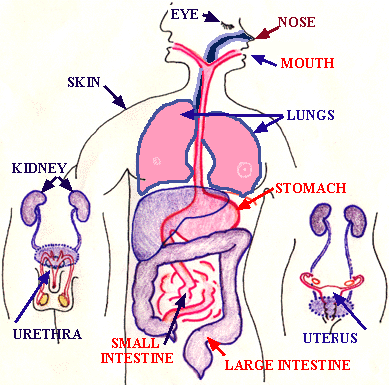
SKIN: The skin is tough, dry, salty, oily,
rich in fatty acids, low in nutrients (lots of dead, empty cells) &
thick. The sweat glands secrete a mixture of salt, & fatty acids that
inhibit many microbes. It also is home for a number of normal flora
organisms that are antagonistic to potential pathogens. Also, the
normal flora scarf up potential nutrients on the skin surface. We are taught
by our mothers from an early age to keep our skin clean, usually to forestall
a serious antisocial ODOR PROBLEM. However, the real benefit of this training
is that it serves to PROTECT US from potential pathogens.
MOUTH AND GASTRO INTESTINAL TRACT: Basically we are designed as an inverted tube. The skin on the outside forms a long tube which makes up our DIGESTIVE SYSTEM. This means that the cells lining this tube are a form of skin cells. As discussed above, the mouth harbors a host of microbes that live more or less permanently, on the inside surface and in the nooks and crannies of the mouth tissues. These microbes are symbiotic and usually do us little harm as long as we remain healthy. Regardless of how thoroughly we brush our teeth this NATURAL FLORA remains literally attached to us. As you might guess from this description, mouth microbes have evolved elaborate systems for "sticking" to things: remember pili? By preventing other, potential pathogens from establishing themselves, they protect us. In addition, there is a continuous flow of fluid (saliva) through the mouth which FLUSHES loose microbes into the stomach.
The stomach contains a strong (hydrochloric) acid. Many microbes are killed by this acidic environment and digested by the proteolytic enzymes in the digestive system. Until fairly recently it was even suggested that the stomach was essentially sterile due to the low pH. However, with the discovery of the bacterium Helicobacter pylori that lives happily in the stomach and causes dreadful things like ulcers and stomach cancer, we know this is not the case. This knowledge is not being applied as rapidly as necessary to the treatment of ulcers.
The small intestine is full of digestive enzymes and detergents (bile) that agreeably digests microbes as well as hamburger & pizza. Further, even though the small intestine may be full of nutrients, the adsorption system of the body is so efficient that these nutrients are ABSORBED from the intestine so rapidly that residential microbes have little to live on. Further, the intestines are anaerobic, so obligate aerobes are unable to grow there even if they should survive the trip through the stomach.
The large intestine is a different story as it collects and processes undigested material that passes through the small intestine. Bacteria, including some very nasty potential pathogens, grow robustly on this debris and yet they rarely manage to invade the body. The wall of the large intestine is coated with a protective mucous layer that separates the contents from direct contact with the cells lining the large intestine. The normal flora of the large intestine evolved to live on the available food supply in the anaerobic conditions found there. Feces are approximately 40% bacteria by weight.
One problem with antibiotics taken by mouth is
that they upset the natural microbial balance and allow unusual microbes
to establish them selves in our bowel. This often results in intestinal
problems (e.g. excess gas and diarrhea) until the original mix of microbes
is again established.
GENITOURINARY TRACT: This region of the body is a rich source of infection for obvious reasons. The urine is a good nutrient for many microbes. Sexual activity SIGNIFICANTLY INCREASES the exposure to potential pathogens. The efficiency of our NDS is shown by the fact that we don't suffer more urogenital infections than we do. Microbes are prevented from reaching the bladder and kidneys mainly due to the vigorous flushing of urine and mucous out of the body through the urethra. However, because the urethra is shorter in women than men, bladder infections are more common in women. Microbial pathogens that infect this region have adhesive pili that attach them to the cells lining the urethra and bladder.
The vaginal area is another region where infections are easily established. However, the vagina is normally acidic due to the growth of lactobacilli that produce lactic and acetic acid. Further, there is a continuous outward flow of mucous that expels microbes from the vagina. Finally the entry to the reproductive organs is blocked by a mucous plug much of the time. However, the vaginal lining is THIN AND EASILY DAMAGED by unsuitable physical activity, including the improper use of sanitary napkins, and its rich blood supply makes it an easy entry point for pathogens. The ease of damage to the vaginal lining is a major reason why women are more likely to become infected with the HIV from fewer exposures.
The flushing of sterile urine through the urethra flushes potential pathogens out and thus prevents bladder infections. If you are subject to frequent bladder infections, you should drink lots of waters and you should urinate soon after sex to wash out potential pathogens that may have entered the urethra during intercourse. Because of their shorter urethras, women are more subject to bladder infections than men.
The anal area is another potential source of infection
if the natural defenses are not sustained. The anal region is continually
exposed to fecal microbes, some like the Clostridium perfringens
can produce serious or even fatal diseases if they are introduced into
the blood or tissue. The mucous covering, while protective as long as it
is maintained, is easily breached as is the delicate anal membranes lining
itself. Thus anal penetration by foreign objects are very dangerous and
explains why STDs are so easily contracted by anal intercourse; i.e., because
of the rupture of the membranes blood is released and infectious agents
like HIV can more easily enter the blood stream. Regardless of any moral
perspective, anal intercourse is not biologically safe as evolution simply
did not design it for that purpose.
RESPIRATORY TRACT: The lungs offer a rich source of nutrients and a great potential for concealing pathogens. Everyday we breath in hundreds of liters of air contaminated with dust, pollen and microbes, yet rarely do we get lung infections. First, the nose is designed so that the TURBULENT FLOW of air throws particulate matter onto the sticky mucous lining where much of it adheres. In addition, this circuitous route through the nasal passages WARMS cold air and COOLS hot air as it contacts the tissues along the way. The particles trapped in the mucous are moved by the BEATING OF CILIA (tiny hairs) that line the air passages into the throat where they are swallowed. Similarly, particles trapped in the lung are carried up and out to the throat also by the BEATING OF CILIA lining the lung. Further, sneezing and coughing expel material out of these passages.
MISCELLANEOUS NDSs: A variety of other nonspecific defense systems exist. These include the enzyme lysozyme in tears and other body secretions. Lysozyme is an enzyme that lyses many prokaryotic cells by digesting the peptidoglycan in their cell walls. Most pathogens require iron in order to survive, but the blood contains a substance, transferrin, that binds free iron so tightly that many microbes can not obtain enough. The blood also contains various white blood cells (WBC-about which we will learn more shortly) that are programmed to attack anything they don't immediately recognize as being "self"; in a nasty world "nonself" is likely to be bad, so they "shoot first and ask questions later".
Fever seems to inhibit the growth of many
pathogens and perhaps speeds up the activities of other defense systems.
Finally, there is the series of reactions that contribute to inflammation;
including the DILATION of blood vessels, and the FORMATION OF CLOTS, which
result in localized pain, heat and swelling. These reactions attract WBC
& antibodies to any sites of damage and the clots tend to LOCALIZE
INFECTIONS so they can be cleaned up by the body's defenses before they
spread.