 LLAMAS
for all reasons
LLAMAS
for all reasons LLAMAS
for all reasons
LLAMAS
for all reasons
|
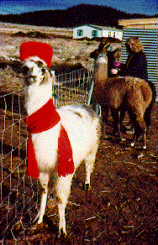
Dressed for the Winter Fest Parade, Harpo stands patiently while I comb out Cheeko and Andes. Llamas have gentle, wondering personalities with a certain independence like cats. |  |
|
|
Llamas were first imported to
this country in the late 1800s. William Randolf Hearst in California
and the Catskill Game Farm in New York developed the first commercial
llama herds in 1928. There are over 95,000 llamas in the United States
today. They are valued for their high quality fleece, their abilities
to pack loads or pull carts, and for their wonderful, gentle dispositions.
|  |
Llamas can reach the age of 25. When they are first born they are called crias. Llamas and Alpacas are members of the Camelid family. Alpacas may be the oldest domesticated animals in the world. The Incas bred and used llamas for work animals as well as for meat and hides. They bred alpacas for fine fiber. |
|
A Guide to Raising Llamas by Gale Birutta. Storey Communications, Inc. Pownal: Vermont. |
|
Caring for Llamas and Alpacas by Clare Hoffman, DVM & Ingrid Asmus. Rocky Mountain Llama and Alpaca Association |
 |
 | |
| . |
| Adult llamas and alpacas are modified ruminants - a pleasant afternoon's entertainment is chewing cud. |
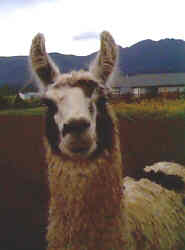 |
Llamas and alpacas have two toes. There is a soft pad on the bottom of the foot. Their toenails grow continuously, just like our fingernails and require trimming. Llama feet are easy on trails. |
 |
Harpo, Emily's llama - all wet. Harpo is Emily's
4-H Llama and somehow, that's how we became llama mommas.
|
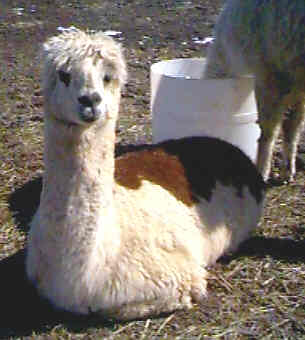 |
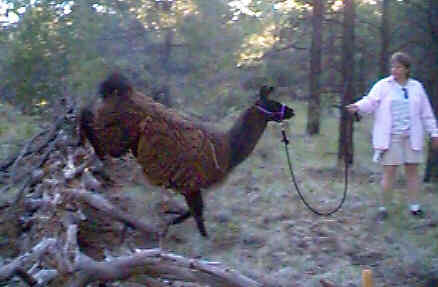
| Rahja jumps the gnarly old log with grace and style with Betsy on the lead. | For good mental health, especially with young llamas, it's better to have TWO llamas than one. | Cisko, Robin's alpaca kushes and sunbathes on an early spring day. |
