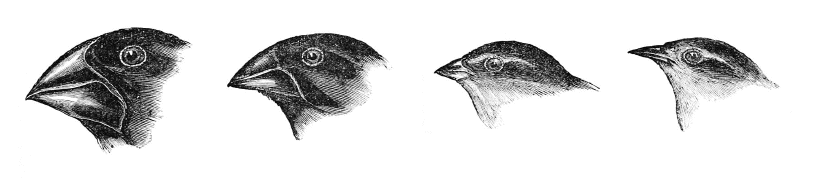
Variation in beak size and shape in four finch species of the Galapagos islands.
Variation in beak size and shape in four finch species of the Galapagos islands.
Introduction: How are bird beaks adapted to the foods they eat? In this lab, we will simulate a scramble competition (kind of like in the old kids' game, "Hungry, hungry hippos") between six species of birds in six different environments. Each bird has a different beak type (spoonbill, tweezerbeak, tongbeak, etc.) and you will find that depending on the food available, some will do better than others in each environment. No two environments are the same and, in our simulation, each one has a different primary food source: stick insects (toothpicks) in the vegetation, water bugs (floating styrofoam peanuts) in the "pond," seeds (popcorn kernels) in the field, worms (cut rubber bands) in the soil, etc. Here are some videos that will give you the idea.
https://www.youtube.com/watch?v=gpNBTPDroWQ
Note: This simulation works best if you can do it with a group of people, so that the competition is "live" and you keep going until all the food is gone. Ideally, gather 6 people. If you have to do it on your own, it will be less fun, but you can instead record the time it took for each bird to eat all of the food in that environment. (You would then need to keep the number of food items constant between trials. In this case, shorter times are better.)
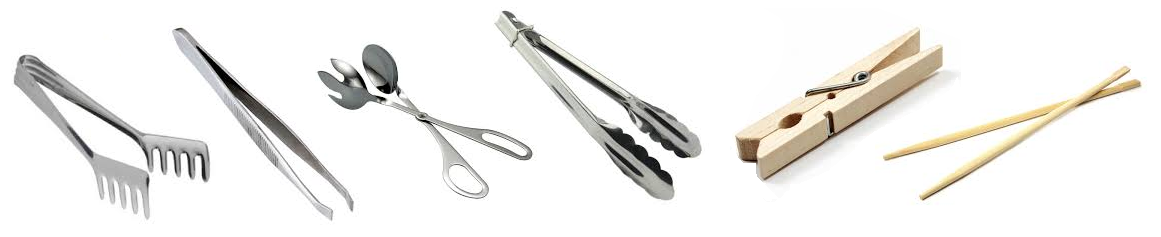
Setup: You will need 6 simulated bird beaks. You can use tongs, tweezers, chopsticks, a spoon, a skewer, a straw, a clothespin, or any other implements that resemble bird beaks. Try to make them as varied as possible. You will also use 6 simulated bird foods. For example, you can float styrofoam peanuts in a bowl of water to simulate water bugs. You can cut up rubber bands to make worms. You can use toothpicks as stick insects, rice grains as ants, popcorn kernels or peanuts as seeds, mini marshmallows as plump juicy grubs. Paperclips, jelly beans, marbles, lego blocks, or whatever else you have on hand will work. Again, the bigger the variety, the more interesting the results. Set out one of the food types on a flat surface and let all six beaks compete for the food at the same time. You could use a cookie sheet or shallow bowl to contain the mess. If you're doing the simulation alone (much less fun), you can compete against the clock to see how much food you can gather in a set period of time, but you'll get a better understanding if you can compete live against real opponents. Replace all the food for each new beak when working alone. Then run the whole simulation again with the same beaks but in the next environment. Record all results.

Rules: Your goal is to compete with the other birds and to gather as much food as possible in each environment. Food items will be "on the ground" (your table or lab bench), and you must use only your assigned "beak" to pick up the food. Food must be picked up off the table, and placed into your "stomach" (your free hand), which must be held up against your body. Your stomach must remain above the level of the table at all times. You may not use your beak for any other purpose than picking up food off the table. For example, you cannot steal food from another bird's beak, nor can you stab the other birds or try to knock food out of their beak. Bodychecking is absolutely forbidden! If the other players agree that you are cheating, you must "regurgitate" all of your gathered food back onto the ground. When all of the food is gone, count and record how many food items each bird captured in that environment, put things back as you found them, and then move on to another environment.
Data Entry: Using a table like the one below, record the Species (type of beak), Environment (type of food), and both the number and percentage of the total food items eaten by each type of bird. Create a bar graph of percent food eaten with 36 bars (a bar for each of the six species in environment 1, env. 2, etc.) using a program like Excel. Label your graph, and color code the bars for emphasis. Include a legend which indicates the color of each species. Try this pre-built Excel table to enter and graph your data. Finally, answer the questions.
Table 1: Number of food items eaten by each species in each environment.
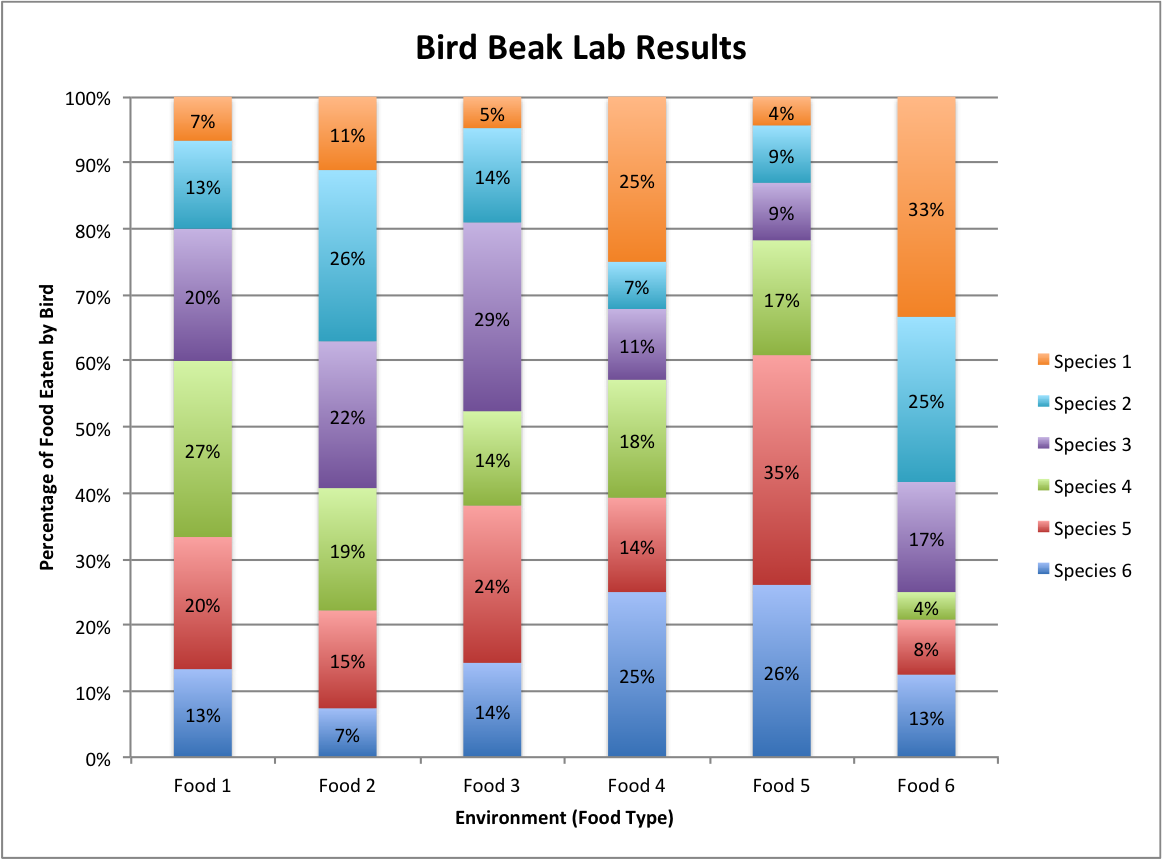
Figure 1: Percentage of food eaten by each species in each environment.
Questions:
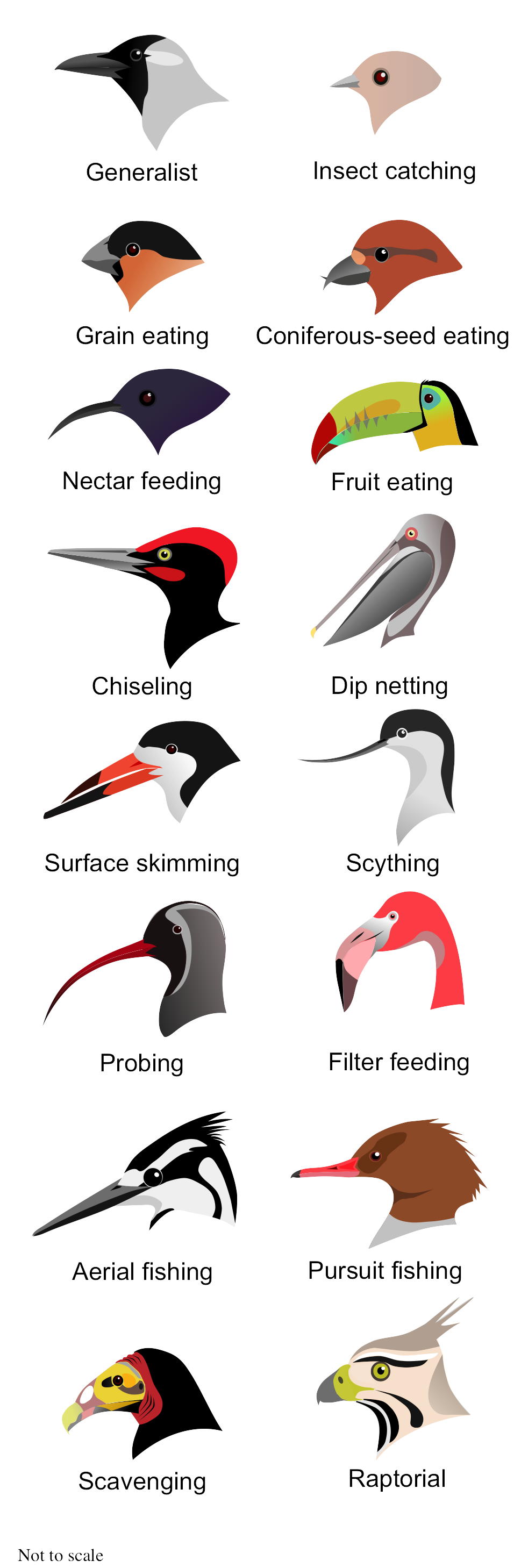
Further Reading:
Learn about the beaks of Darwin's Finches and the beaks of the Hawaiian Honeycreepers. Compare the habits of Sphinx Moths and Hummingbirds.