
Fall 2026
Department of
History
HIS 600:
Historiography and Methodologies
Meetings: Monday, 4:00 - 6:30
pm, LA 203
Instructor: Sanjay
Joshi


Course Description
Despite
Calvin’s profound opinions on our discipline, paying attention to questions about
history changes what we know as history. This seminar introduces new
graduate students to trends in modern historiography. While literally meaning, the writing of history, “historiography”
also refers to theories of history. The course asks you to think about a range
of questions related to our discipline: What is history? How have historians
approached the study of the past? How and why have there been changes in the
approach to the study of history? This seminar is designed to make students
aware of the dynamic nature of scholarship within (and outside) the discipline.
We will do so by examining some of the major shifts (or
“turns”) and debates within the discipline over the last fifty years or so.
The course is divided into three parts. Part One consists of a
series of introductions -- to the idea of historiography, to some recent changes
in the approaches to the writing of history, and how historians have correlated
these changes with those in the larger world. A central theme running through
these introductions is the relationship between power and the writing of
history. Part Two examines this relationship in more detail. We examine a
variety of approaches that have shaped modern historiographical scholarship. The
work of Marxist, Feminist, Foucauldian, and Postcolonial theorists, among
others that we read in this part of the course, has brought to light different
configurations of power shaping the way in which we write and understand
history. Finally, in Part Three, we look at a few of the approaches and
methodologies that appear to be changing the field. No course of this nature can ever hope to be
exhaustive in its coverage. I am well aware of many
themes, approaches, and debates we do not discuss this semester. Undoubtedly,
there are other omissions of which I am not aware. The purpose of this course is
to introduce students to some
elements from vibrant and dynamic field of scholarship with the intention that
their own interests will take them far beyond the confines of this syllabus.
Objectives
Students are
expected to gain an appreciation of the broad philosophical background of
historical schools and especially of the way in which all historical questions,
research, writing, and judgments, are themselves the products of history. From
the readings, they should acquire a basis for understanding (rather than
resolving) persistent issues and debates in the discipline. Writing assignments
ask students to critically analyze the readings and reflect upon how we “do” history.
Course Structure and Approach
The course is conducted in a seminar format in which students actively
participate through the exchange of ideas in critical discussions of readings. Because
all seminars are efforts at collaborative learning, attendance and
participation in the seminars is of critical importance. Under normal
circumstances, you are expected to be present for each class meeting, and
absences, other than for university-accepted reasons, will be penalized.
Required Texts The following books are part of the required reading for this
class.
1. Carr, E. H. What Is History? Revised.
Palgrave, 2001. ISBN: 978-0333977019 The Internet Archive has a copy
2. Munslow, Alun. Deconstructing
History. 2nd Edition. Routledge, 2006. ISBN 9780415391443 Also available as EBook via Cline. This
is the direct link to the book.
3. Trouillot, Michel-Rolph. Silencing
the Past: Power and the Production of History. Foreward by Hazel
V. Carby. Beacon Press, 2015. ISBN: 978-080708053-5 There’s a link here
4. Said, Edward W. Orientalism. Vintage, 1979.
ISBN: 978-0394740676 (I haven’t found any legal links)
5. Foucault, Michel. Discipline & Punish: The
Birth of the Prison. 2nd ed. Vintage, 1995. ISBN: 978-0679752554 (no links
found)
6. Conrad, Sebastian. What Is Global History? Princeton University Press, 2016. ISBN: 9780691155258
(no links)
7. Ghosh, Amitav. In An Antique Land: History in
the Guise of a Traveler's Tale. Vintage; Reprint edition (1994) ISBN: 978-0679727835 (no links)
In addition, some REQUIRED scholarly articles are
available electronically, usually via direct links embedded in the electronic
version of this syllabus.
Recommended
Texts
On certain weeks, I have recommended some articles that might help you
make better sense of the themes and required readings for that week.
Assignments and Assessment
There are four different sorts of assignments (subject to modification)
required of all students enrolled in this class.
- You will have to write two
review essays. Look at professional
journals in your area of interest to look at best practices for review
essays. Reading academic journals in your areas of
interest is an integral part of your graduate education in History
1. In around
five
to eight to ten double-spaced pages, analyze the readings from Part One of the course. As
a guide, you may use the following question(s): Is History simply a recounting
of the past? What do you make of the ways in which historiography changed from
Carr’s time to Eley’s? What does Trouillot add to the
dimensions of historiography discussed by Carr and Eley? DUE end of day on SEPTEMBER
28, on CANVAS. 15 points (there
is no class meeting on this date to allow to you time
to focus on your writing).
2. In about ten
to fifteen double-spaced pages show how might you use the entire set of
course readings to analyze Amitav Ghosh’s In an Antique Land: History in the Guise of a
Traveler's Tale. While I
obviously need you to read and understand Ghosh’s book, the objective of this assignment is to
demonstrate to me your understanding of the material from this course. I happen
to believe the best way of doing that is to “apply” theoretical knowledge to a
specific case study. I am asking you to use Ghosh’s book as that “case study.” DUE
by end of the day on DECEMBER 7
on Canvas. 20 points
- Regular response papers to the
week’s readings. You need to submit response papers to at least
EIGHT of the ten (eleven including Munslow) weeks where we have assigned
readings. I ask you to write at least two responses from Part I of the course, at least three from Part II, and at
least one from Part III. If you do more than eight response papers,
I will take the best eight reviews into account
for the grade.
Your response papers should start with the THESIS of
the reading(s) for the week (or what ties them together). You should provide a
short summary of the work(s) you read, and end with your own reflections on the ideas you encounter in the
readings. I encourage you to raise questions based on your review and include
them as part of your review. I expect the response papers to be between two and
four DOUBLE SPACED pages (one-inch margins) and submitted to me on the day of the class
meeting, BEFORE THE CLASS MEETING TIME.
That
you can skip writing response papers for some weeks does NOT mean you can come
to class without having done the week’s assigned readings. You are
responsible for completing ALL the required readings for this course. Each response paper will count for 5
points, and together these will comprise 40 points.
C.
Starting Week Four (and through to Week 13), one student
will be responsible for LEADING CLASS DISCUSSION during class meetings. Other
than administrative stuff, and some interventions from
me, the running of that class will be in the hands of that student for that
week. Of course, you have to work within the confines
of the syllabus and assigned readings. I will take down student preferences,
starting Week One. Weeks for leading discussion are assigned on a
first-come-first-served basis. All students should have signed up to lead class
discussion by Week Three, at the latest. 10 points
You will be evaluated on your own understanding of
the material for that week, and how well you are able to communicate that to
your peers. I strongly recommend that you meet with me the Thursday before
you are to lead the class discussion. By noon on the day before you are leading
the discussion, please submit to me (via email if necessary) a WRITTEN outline
of your plan for leading discussion, the questions you will pose, and any
supplementary material.
- Regular Attendance and
Participation. This is a seminar, where we learn not through
passive osmosis, but by participating in meaningful conversations with each other. Attendance and
participation over the ENTIRE semester, including days when you have
chosen not to write reviews of the reading, is crucial. Participation
means just that. Your physical presence in the class is mandatory, of
course (unless there is a real emergency that prevents you from attending,
please let me know of any absence in advance, if possible). However, mere
presence does not constitute full participation. Nor does simply talking in
the classroom equal participation. I want you to come to the classroom,
having completed the assigned readings, and ready to engage thoughtfully
with the readings, and move our discussion in new directions. Attendance
and participation, evaluated at my discretion, will count for 15
points.
Evaluation
TOTAL
2 Review Essays 35
points
TOTAL
8 Response Papers 40 points
Leading
Discussion 10
points
Attendance
and Participation 15
points
TOTAL
for course 100
points
Grading Scale: 90-100 = A; 80-89 = B; 70-79 = C; 60-69= D;
below 60 = F
PLEASE
NOTE: I do not
give extensions or incompletes except in the most
extreme cases. Plagiarism will not be tolerated and will result in failing the
course. Please consult the NAU Student Handbook's sections on academic
dishonesty if you are not certain of the meaning of this term. IT IS THE
STUDENTS' RESPONSIBILITY TO FAMILIARIZE HERSELF/HIMSELF WITH THESE MATTERS AS
DEFINED BY THE UNIVERSITY.
Provisional Course Schedule: Subject to Modification
PART I. Introductions
Week
One August 24 Course Introduction
Agenda
Who
are we? What is this course about?
A
discussion of Akira Kurosawa’s Rashomon and history.
(You
should already have seen this film before coming to class. It’s available to
stream via Canvas, on the free platform Plex, and on https://www.youtube.com/watch?v=I3YF3-7tV7k
)
Week
Two August 31 The Historiographical Approach
Discuss
Required Reading
Carr, What is History?

RECOMMENDED
Alun Munslow Reviews E. H. Carr’s What is History
Week
Three September 7 An Overview of Changes
Labor
Day Holiday
Strongly
Recommended Reading
Munslow, Deconstructing
History.
Although
this is a holiday, what is Labor Day without some labor! Therefore, I strongly recommend you read this
book that gives you an overview of the historiographical field.

Week
Four September 14 Power
and the Past
Discuss
Required Reading
Trouillot, Silencing the Past.

Week Five September 21 No
Class, work on your papers
Week Six September 28 No
Class Meeting First Review Essay is due.
PART II. Methodologies
of Power
Week Seven
October 5
Class and history
The
readings for this week consist of both primary and secondary readings. They may seem like a lot, but, for most part,
the readings are pretty short.
Discuss
Required Reading
1.
Rius, Marx For Beginners. Extracts http://jan.ucc.nau.edu/~sj6/Middle
Class Course/marx_for_beginners extracts.pdf
(a fun starting point) secondary
source
2.
Walter L Adamson, “Marxism and Historical Thought”
in Lloyd Kramer and Sarah Maza ed. A
Companion to Western Historical Thought. (Oxford: Blackwell, 2002)
pp. 205-222.
http://jan.ucc.nau.edu/~sj6/Adamson
Marxism and Historical Thought.pdf secondary source
3.
Karl
Marx, “Preface” to A Contribution to the Critique of Political Economy
(1859) https://www.marxists.org/archive/marx/works/1859/critique-pol-economy/preface.htm primary: theoretical outline of
historical method (see paras 5-7)
4.
Karl
Marx, “Chapter One: Bourgeois and Proletariat” Manifesto of the Communist
Party (1848) https://www.marxists.org/archive/marx/works/1848/communist-manifesto/ch01.htm primary source:
theoretical/polemic
5.
Karl Marx, “Chapter One” The
Eighteenth Brumaire of Louis Bonaparte (1852) https://www.marxists.org/archive/marx/works/1852/18th-brumaire/ch01.htm primary source: example of how Marx applied his method
6.
Pierre
Bourdieu, “The Forms of Capital,” trans. Richard Nice, chapter 9
in John G. Richardson (ed.), Handbook of Theory and Research for the Sociology
of Education (Greenwood Press, Westport, CN, 1986). Secondary source,
application of Marx’s method in a framework, connecting the material and
cultural aspects of social analysis.
RECOMMENDED
1.
I
found the following essay to be very useful guide while reading the 18th Brumaire http://isreview.org/issue/74/eighteenth-brumaire-louis-bonaparte If that is too much, you may
consider using the Wikipedia page https://en.wikipedia.org/wiki/The_Eighteenth_Brumaire_of_Louis_Bonaparte
2. What is Marxism: The Marxist Theory
of History http://www.marxism.org.uk/pack/history.html
3.
Among
secondary readings E. P. Thompson, “Time, Work-Discipline, and
Industrial Capitalism.” Past
& Present, No. 38 (Dec., 1967), pp. 56-97
provides a very historically grounded account of how an English proletariat was
created via clock-time.
4.
T.
J. Jackson Lears, “The Concept of Cultural Hegemony:
Problems and Possibilities.” The
American Historical Review, Vol. 90, No. 3 (Jun., 1985),
pp. 567-593 is a very readable application of Gramsci’s ideas of hegemony in
the context of US history.
5.
I
found the following sites to be very useful for relating Marx and Gramsci and
outlining some of the major Gramscian interventions https://web.archive.org/web/20080124120100/http://www.theory.org.uk/ctr-gram.htm#hege
(particularly 1-4), AND https://scholarblogs.emory.edu/postcolonialstudies/2014/06/20/hegemony-in-gramsci/
Week Eight
October 12
Histories and the Other
Discuss
Required Reading
Said, Orientalism.
1.
Edward Said’s Video Interview “On Orientalism”
2.
Amardeep Singh’s useful blog
post on Said and Orientalism
Week Nine
October 19 Radical History to Subaltern Pasts
Discuss
Required Reading
1.
Ranajit
Guha, “Preface” and “On Some Aspects of
the Historiography of Colonial India.”
Selected
Subaltern Studies. Ranajit Guha and Gayatri Chakravorty Spivak eds. New York: Oxford
University Press, 1988), 35-44.
2.
Dipesh
Chakrabarty, “Postcoloniality and the Artifice of
History: Who Speaks for "Indian" Pasts?” Representations, No. 37,
Special Issue: Imperial Fantasies and Postcolonial Histories (Winter, 1992),
1-26.
3.
Gayatri
Chakravorty Spivak, “Can the Subaltern Speak.” Marxism and the
Interpretation of Culture. Cary Nelson and Lawrence Grossberg eds.
(Basingstoke: Macmillan, 1988), 271-313.
4.
Leon
De Kock, “Interview With Gayatri Chakravorty
Spivak: New Nation Writers Conference in South Africa.” ARIEL: A Review of
International English Literature, 23:3 (July 1992). I very STRONGLY suggest you read this BEFORE
reading the Spivak essay above. That
essay is pretty dense, and reading this interview will
help you better understand the point of the above essay.
RECOMMENDED
Priya Satia, Time’s
Monster: How History Makes History (link to
the book)
Week Ten
October 26
Feminist Historiography
Discuss
Required Reading
1. Introduction to AHR Forum Revisiting “Gender: A Useful
Category of Historical Analysis,” The American Historical Review, 113, 5
(Dec., 2008), pp. 1344-1345.
2.
Joan
W. Scott, “Gender: A Useful Category of
Historical Analysis.”
The American Historical Review, Vol. 91, No. 5 (Dec.,
1986), 1053-1075.
3.
Chandra
Talpade Mohanty, “Under Western Eyes: Feminist
Scholarship and Colonial Discourses”
Feminist Review, No. 30 (Autumn, 1988), 61-88.
4.
Saba
Mahmood, “Feminist Theory, Embodiment, and
the Docile Agent: Some Reflections on the Egyptian Islamic Revival.” Cultural Anthropology,
Vol. 16, No.2 (May 2001), 202-236.
5.
Mrinalini
Sinha “A Global Perspective on Gender:
What's South Asia Got to Do with It?”
in South Asian Feminisms. Ania Loomba and Ritty
Lukose eds. (Durham: Duke University Press, 2012), 356-74.
Week Eleven
November 2
Histories of the Present?
Discuss
Required Reading
Foucault, Discipline
& Punish.
PART III. Newer
Questions in the Discipline
Week Twelve
November 9 Worlding History
Discuss
Required Reading
Sebastian Conrad, What Is Global History?
RECOMMENDED
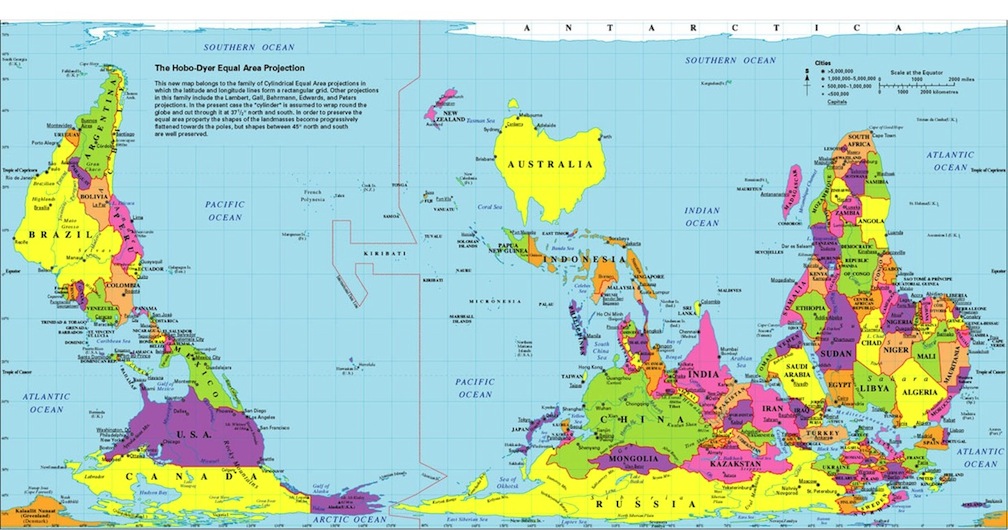
Do look at the map at http://www.transpacificproject.com/wp-content/uploads/2011/06/SouthUpMapr.jpg
- Heather Streets-Salter, “Becoming a World
Historian: The State of Graduate Training in World History and Placement
in the Academic World” 45-62
- Leslie Witz, “Meetings of World History and
Public History” (Access both via Canvas)
Week Thirteen November 16
Archives and Narratives
Discuss
Required Reading
1. Carolyn
Steedman, “After the
Archive.” Comparative Critical Studies 8.2–3 (2011): pp. 321–340.
2. Ann Laura
Stoler, “Colonial Archives and the Arts of
Governance.” Archival
Science, 2 (2002): pp. 87–109.
3. Anjali
Arondekar, “Without a
Trace: Sexuality and the Colonial Archive.” Journal of the History
of Sexuality, Vol. 14, No. 1/2, Special Issue: Studying the History of
Sexuality: Theory, Methods, Praxis (Jan. - Apr.,
2005), pp. 10-27.
4. Saidiya Hartman, “Venus in
Two Acts” Small Axe, Number 26, Volume 12, Number 2, (June 2008): pp.
1-14.
5. Jean
Allman. “The
Disappearing of Hannah Kudjoe: Nationalism, Feminism, and the Tyrannies of
History.” Journal of Women’s History, Vol. 21 No. 3, (2009): pp. 13–35.
Week
Fourteen November 23 For the Final Review Paper
Discuss
Required Reading
Ghosh, In an Antique Land (main
themes and events of the book, and how it relates to the readings for this
course)
Week Fifteen:
November 30 No Class Meeting
Work on
your final paper
Final paper is DUE DECEMBER 7 by the end of
day on Canvas.