
American Indian / Indigenous Education

|
|
|
American Indian / Indigenous Education | |
| |
| books | conferences | articles | columns | contact | links | index | home | |
| |
Indigenous Education Articles |
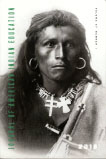 |
Jon Reyhner This 2018 article examines the assimilationist, English-only, and ethnocentric history of the U.S. government's boarding schools serving American Indian students and current attempts to make Indian education less ethnocentric and more culturally sensitive. It is part of a special spring 2018 issue of the Journal of American Indian Education focused on boarding schools published in conjunction with the Heard Museum's exhibit, Away from Home: American Indian Boarding School Stories, that reopened in in Phoenix, Arizona, in 2019. |
 |
Jon Reyhner This 2017 Cogent Education article examines recent American Indian and Hawaiian efforts at language and culture revitalization in schools and how these efforts are helping students develop a strong positive sense of identity and achieve more academic success. These efforts focus on promoting human rights and are in line with the United Nations 2007 Declaration on the Rights of Indigenous Peoples. This article is part of a special issue of the journal on Revitalization of Indigenous Languages: Designing and Facilitating Immersion Programs. |
 |
Jon Reyhner and Navin Kumar Singh This 2010 Indigenous Policy Journal article examines the nature of cultural genocide and recent efforts to stem its ongoing effects in the only four countries that voted against the 2007 United Nation's Declaration on the Rights of Indigenous Peoples. It gives a brief chronicle of the destruction and transformation of Indigenous cultures through a history of assimilationist schooling in Australia, Canada, New Zealand, and the United States from the 19th century to the present day, examining what aspects can be considered cultural genocide and what can be considered voluntary cultural change. It then examines current efforts to reverse assimilation and revitalize Indigenous cultures through immersion language programs and concludes with samples of the current rhetoric on the treatment of Indigenous peoples characterized by the 2007 Declaration on the Rights of Indigenous Peoples and the recent apologies by the Prime Ministers of Australia and Canada. |
 |
Jon Reyhner and Denny S. Hurtado The No Child Left Behind (NCLB) Act of 2001 and its Reading First provisions were an attempt to close the academic achievement gap between mainstream Americans and American Indian/Alaska Native and other ethnic minority groups who have a history of below average academic achievement. This article gives evidence that despite its laudable goals, there are serious flaws NCLB because it overlooks the role of poverty, motivation, and cultural differences that are major contributors to the achievement gap and because its Reading First provisions have strayed from the "balanced approach" recommended in the National Reading Panel's report, leading to an overemphasis on phonics approaches to reading instruction. This article is part of a 2008 special issue of the Journal of American Indian Education on NCLB. |
 | Jon Reyhner Jared Desmond's answer to a New Guinea Native's question: "Why is it that you white people developed so much cargo [technological things] and brought it to New Guinea, but we black people had little cargo of our own?" | 
| Jon Reyhner This 2006 article discusses the instructional methodology authors and teachers have used to help American Indian students become better readers and writers. |
|
Jon Reyhner This 2006 article examines the reasons why students drop out of school with special attention to American Indian students and looks at what can be done to keep them in school. | 
|
Jon Reyhner This 2006 article contrasts educational efforts to boost students' self esteem with the traditional Indian value of humility and explores what efforts are needed to raise the academic achievment of Indian students. |
|
Jon Reyhner This April 2006 Indian Education Today article discusses the link between learning to read and write well and Indian sovereignty. | 
|
Jon Reyhner This March 2006 Indian Education Today article discusses the National Indian School Board Association's Creating Sacred Places for Children curriculum, research on effective Indian schools, and weaknesses in the No Child Left Behind Act. |
 | for Teaching American Indian and Alaska Native Students Jon Reyhner, Harry Lee and David Gabbard Outlines a proposed additional knowledge base that can be adopted by beginning teachers of American Indian and Alaska Native students. This additional knowledge base is above and beyond what is now in most mainstream teacher education programs. First, we discuss the idea of a knowledge base for teacher education and explain the need for a specialized knowledge base for Native education. Second, various aspects of that specialized knowledge base are outlined. We begin with the area of educational foundations, and then we describe specialized instructional methodologies and curriculum appropriate for Native students. Finally, we describe needed internship and student teaching opportunities. 1993 Tribal College Journal article. |
 | for American Indian and Alaska Native Students Jon Reyhner American Indian and Alaska Native students have a dropout rate twice the national average; the highest dropout rate of any United States ethnic or racial group. About three out of every ten Native students drop out of school before graduating from high school both on reservations and in cities. Academically capable Native students often drop out of school because their needs are not being met while others are pushed out because they protest in a variety of ways how they are treated in school. This paper originally prepared for the Indian Nations at Risk Task Force summarizes research on dropouts and describes seven reasons Native students drop out of school: Large schools, uncaring teachers, passive teaching methods, irrelevant curriculum, inappropriate testing, tracked classes, and lack of parent involvement. It concludes with recommendations to decrease the number of Native dropouts. Also available from ERIC: ED343762. A version of this paper was printed in the Journal of American Indian Education, January 1992. |
This paper gives detailed instructions on
how to develop a high interest
culturally appropriate instructional unit for American Indian and
other students. It includes 15 steps for planning a unit.
Contains a synthesis of research and writing on the subject of recruiting and retaining American Indian and Alaska Native students in tribal colleges and public and private universities and presents the results of a study of 24 successful American Indian college students who were seniors at a state supported college in Montana. Family support, Indian advocacy group support (for example the work of the American Indian Science and Engineering Society), peer support, and institutional support (including minority student offices) are examined with the purpose of identifying what factors lead to Native student persistence in higher education. Successful students in the study were mostly non-traditional (in the college sense) students who had interrupted their college studies at least once. They identified as obstacles to their college success prejudice, finances, language, and alcohol in descending order. These students were helped in their college career most frequently by caring and understanding faculty. Recommendations are made on what needs to be done to orient new Native students to the higher education setting and what college professors need to do to adapt their teaching styles to the needs of Native students.
| |
| books | conferences | articles | columns | contact | links | index | home | |
|
| Copyright © 2024 Northern Arizona University, All rights reserved. |